

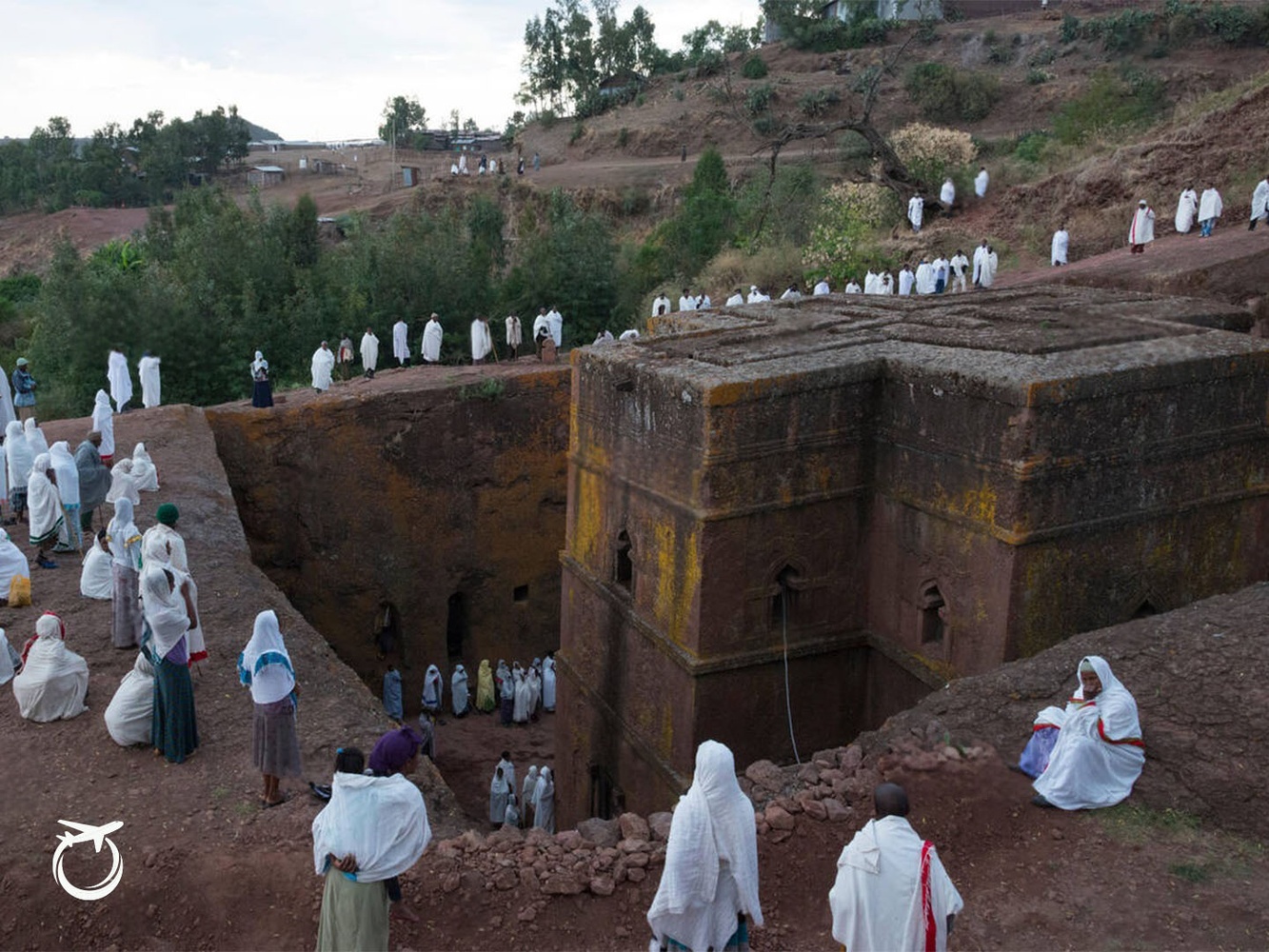
Carved directly down into solid volcanic rock more than eight centuries ago, the churches of Lalibela are among the most astonishing sights in all of Africa. Often called the eighth wonder of the world, this cluster of monolithic structures in the Ethiopian highlands continues to function as a living place of worship, where white-robed pilgrims and priests fill the ancient corridors just as they have for generations.
For many travellers, Lalibela is the highlight of any trip to Ethiopia, and for good reason. There is nothing quite like descending into a courtyard cut from the bedrock and looking up at a cross-shaped church that seems to have grown out of the earth itself. As a company that flies visitors to Ethiopia regularly, we have helped countless travellers make the journey, and in this guide we share everything you need to plan your own.
From the history of King Lalibela to how to get there, what tickets you need, and the etiquette to observe inside these sacred spaces, here is our complete Lalibela travel guide.
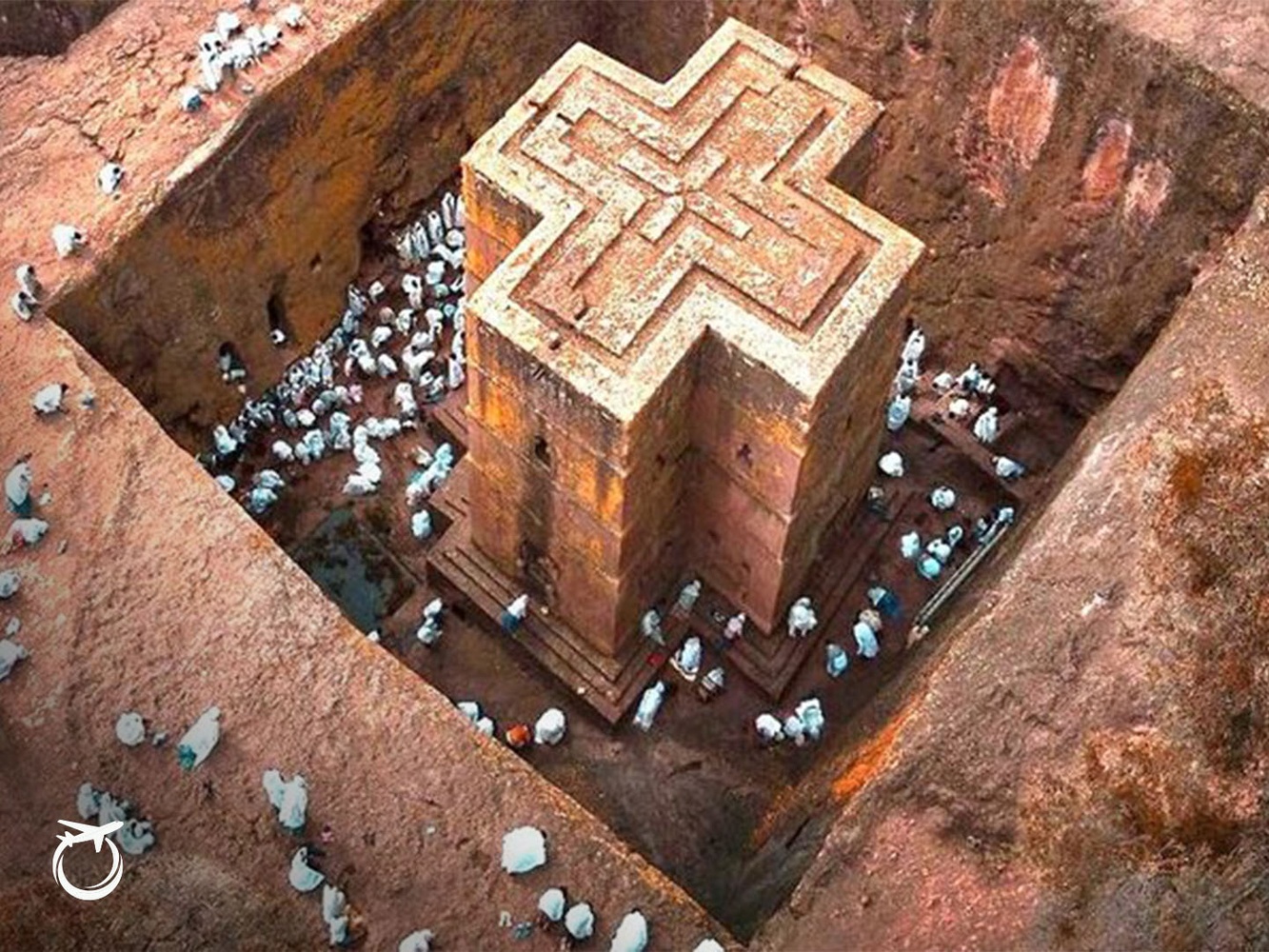
The Eleven Rock-Hewn Churches
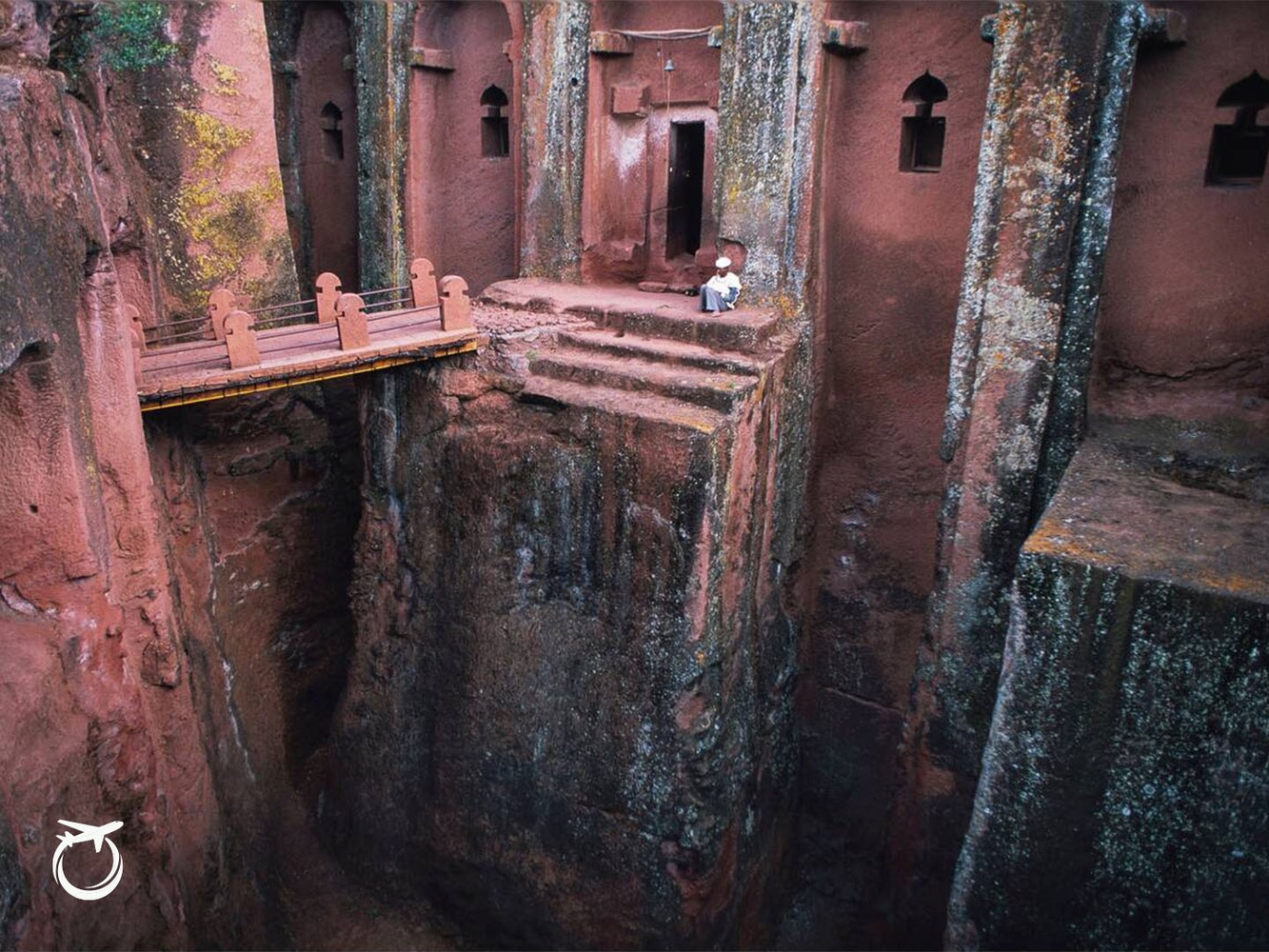
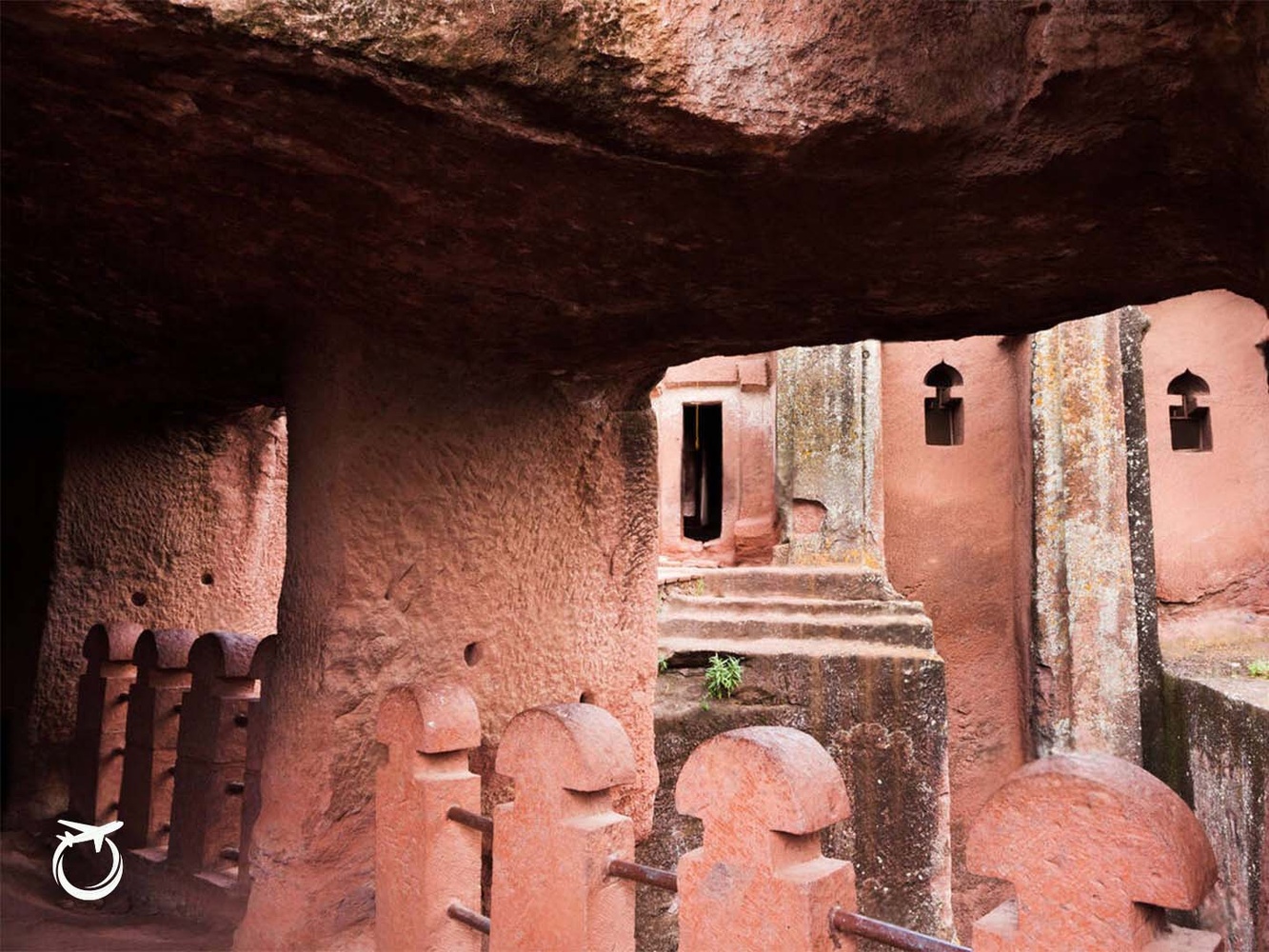
Lalibela is home to eleven medieval churches, each carved entirely from a single block of rock. Rather than being built up from stones, they were excavated downward and inward, with builders chiselling away the surrounding rock to leave a freestanding structure connected to the world only by trenches, tunnels, and passageways.
The churches are traditionally grouped into a northern cluster and an eastern cluster, linked by a maze of tunnels, with one standing apart on its own. Highlights include Bete Medhane Alem, considered the largest monolithic church in the world, and Bete Maryam, one of the most beautifully decorated. But the most iconic of them all is Bete Giyorgis, the Church of Saint George.
Bete Giyorgis, the Church of Saint George
Carved in the shape of a perfect Greek cross and set into a deep pit, Bete Giyorgis is the image most people picture when they think of Lalibela. Viewed from above, its cruciform roof is mesmerising, and descending the trench to its entrance feels like stepping back in time. It is the most photographed and arguably the most perfectly preserved of all the churches.
History of Lalibela
The churches are attributed to King Lalibela, who ruled the Zagwe dynasty and is believed to have commissioned their construction in the late 12th and early 13th centuries. According to tradition, the king sought to create a New Jerusalem in the Ethiopian highlands, a holy site where the faithful could make a pilgrimage without travelling to the Holy Land. Many of the local place names, including a small river called the Jordan, reflect this ambition.
How exactly the builders achieved such precision with the tools of the era remains a source of wonder, and local tradition holds that angels worked through the night to help complete them. In 1978, the rock-hewn churches of Lalibela were inscribed as a UNESCO World Heritage Site, recognising their outstanding universal value. They remain an active centre of Ethiopian Orthodox worship to this day.
How to Get to Lalibela
Lalibela sits high in the mountains of northern Ethiopia, and getting there is part of the adventure. There are two main options, and we have a clear recommendation.
By Air (Recommended)
The fastest and most comfortable way to reach Lalibela is to fly. A direct flight from Addis Ababa to Lalibela Airport, which carries the code LLI, takes only around one hour. From the airport it is a short transfer up to the town itself. Flying saves you an enormous amount of time and spares you a long, winding road journey, which is why the vast majority of our travellers choose this option. You can search flights to plan your route through Addis Ababa.
By Road
It is possible to reach Lalibela overland, but the drive from Addis Ababa is long and typically takes around two days, often broken up with an overnight stop. While the mountain scenery is beautiful, the roads are winding and the journey is tiring. We only recommend the road option for travellers with plenty of time who specifically want the overland experience. For everyone else, the short flight is well worth it.
Tickets
To visit the churches you need to purchase an entrance ticket, which is typically a multi-day pass covering all eleven churches. The pass is purchased at the main ticket office and is generally valid for several days, allowing you to spread your visits across more than one session, which we recommend so you are not rushing. Keep your ticket safe, as you will need to show it at the church complexes.
Prices are set by the local authorities and can change, so we do not list a fixed amount here. Please verify current pricing when you arrive or ask your guide or hotel in advance. Hiring a knowledgeable local guide is also well worth it; the history and symbolism of the churches come alive far more with someone to explain them.
Best Time to Visit Lalibela
The most pleasant time to visit Lalibela is during the dry season, roughly October to March, when the skies are clear and the mountain weather is comfortable. For an unforgettable cultural experience, consider timing your trip around a major religious festival. Genna, the Ethiopian Christmas on January 7, is celebrated with extraordinary devotion in Lalibela and draws pilgrims from across the country. Be aware that festival periods are very busy, so book your flights and accommodation well in advance.
Where to Stay
Lalibela offers a range of places to stay, from simple guesthouses to comfortable lodges with sweeping views over the highland valleys. Staying overnight is essential, since you will want at least a full day, ideally two, to take in the churches without rushing. Some lodges perched on the ridges above town offer spectacular sunset views that are an experience in themselves. Browse and compare hotels to find something that suits your budget and style, and book early during festival seasons.
Suggested Two-Day Itinerary
- Day 1: Fly from Addis Ababa to Lalibela in the morning and settle into your accommodation. In the afternoon, explore the northern cluster of churches, including the magnificent Bete Medhane Alem and the decorated Bete Maryam, with a local guide.
- Day 2: Begin early to visit the eastern cluster and then the unforgettable Bete Giyorgis, ideally in the soft morning light. Spend time simply absorbing the atmosphere and watching the priests and pilgrims before your departure flight.
What to Wear and Etiquette
The churches of Lalibela are sacred, active places of worship, so respectful dress and behaviour are important. We recommend the following.
- Dress modestly, with shoulders and knees covered for both men and women.
- You will need to remove your shoes before entering each church, so wear footwear that is easy to slip on and off, and consider bringing socks for the stone floors.
- Always ask permission before photographing priests or worshippers, and be quietly respectful during services.
- Move calmly through the tunnels and trenches, which can be uneven and dimly lit; a small torch is handy.
Begin Your Journey to Lalibela
Standing inside these ancient rock-hewn churches is the kind of experience that stays with you for a lifetime. We would be honoured to help you get there. Book your flights to Ethiopia with FlyEthio, connect onward to Lalibela, and witness one of the world's true wonders for yourself. Explore our tour packages for a fully arranged northern Ethiopia itinerary, or contact us to start planning.
Frequently Asked Questions
How many rock-hewn churches are there in Lalibela?
There are eleven rock-hewn churches in Lalibela, each carved from a single block of solid rock. They are grouped into a northern cluster and an eastern cluster connected by tunnels, plus the famous Bete Giyorgis, the Church of Saint George, which stands on its own.
How do I get to Lalibela?
The easiest way is to fly from Addis Ababa to Lalibela Airport, a journey of around one hour. It is also possible to drive, but the overland route from Addis Ababa takes roughly two days, so we recommend flying for almost all travellers.
How much does it cost to visit the Lalibela churches?
Entry requires an entrance ticket, usually a multi-day pass covering all the churches. Prices are set locally and can change, so we do not list a fixed amount. Please verify current pricing when you arrive or ask your hotel or guide beforehand.
When is the best time to visit Lalibela?
The dry season from October to March offers the most comfortable weather and clear skies. For a remarkable cultural experience, visit during Genna, the Ethiopian Christmas on January 7, when Lalibela hosts one of the country's most important pilgrimages, though it is very busy.
How many days do I need in Lalibela?
We recommend at least two days so you can explore the northern and eastern clusters of churches and Bete Giyorgis without rushing. A multi-day ticket and an overnight stay let you visit in the best light and fully absorb the atmosphere.
What should I wear to visit the churches?
Dress modestly with shoulders and knees covered, and wear shoes that are easy to remove since you must take them off before entering each church. Bringing socks for the stone floors and a small torch for the dim tunnels is also a good idea.