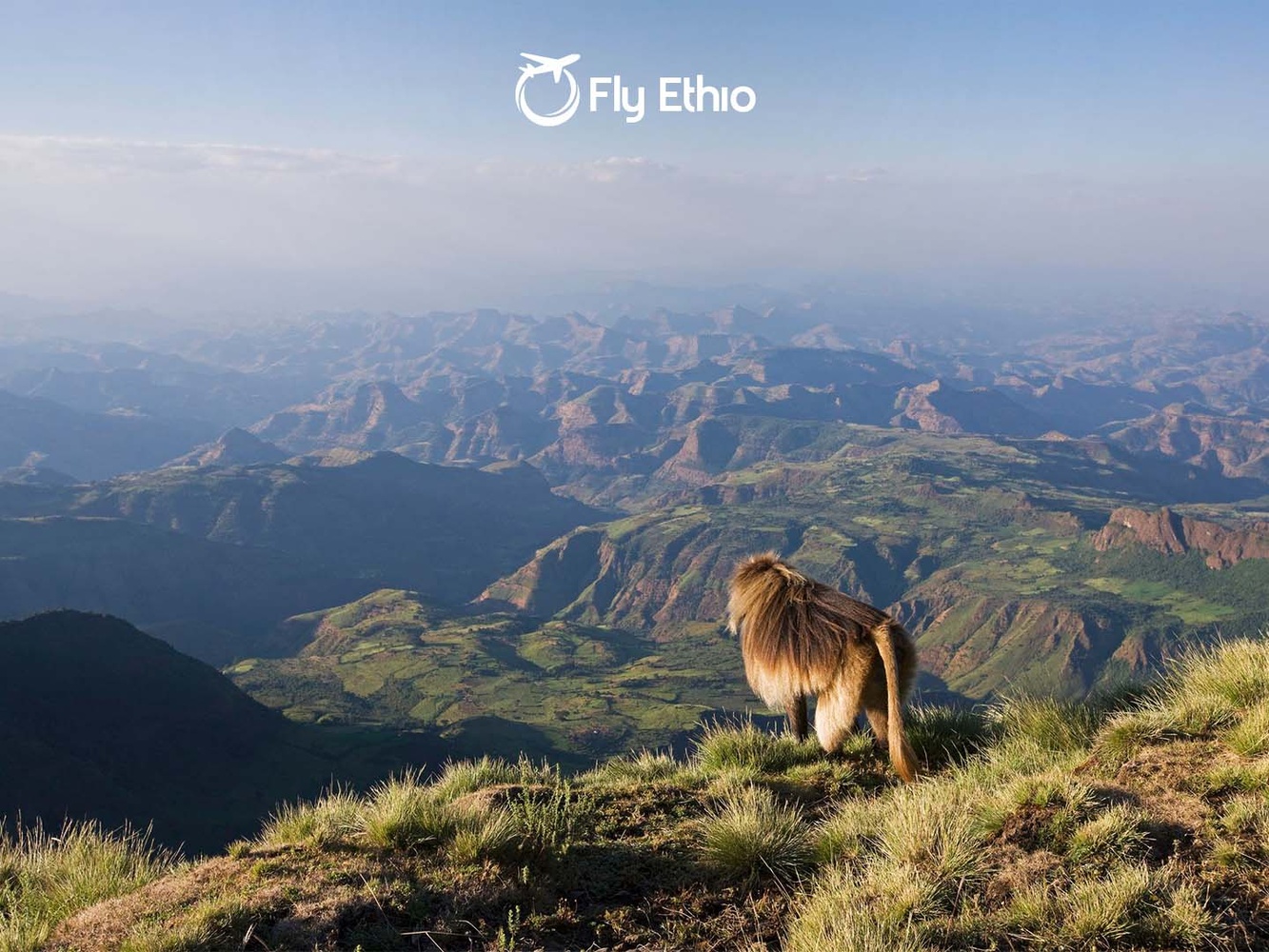
Few places on earth deliver the sheer drama of the Simien Mountains. Jagged volcanic pinnacles rise above sheer escarpments that plunge a thousand metres to the lowlands, mist pours over the cliff edges at dawn, and troops of shaggy gelada monkeys graze the high meadows as if you were not even there. This is one of Africa's most rewarding trekking destinations, and a highlight of any journey through northern Ethiopia.
Designated a UNESCO World Heritage Site in 1978, Simien Mountains National Park protects a unique Afro-alpine ecosystem and a roll-call of wildlife found nowhere else on the planet. Whether you have a single day or a full week, there is a route here that will leave you awestruck. In this guide we walk you through the wildlife, the classic trek options, how to get there, the rules you must follow, and exactly how to prepare.
We have put together everything we wish we had known before our first visit, so you can spend less time worrying about logistics and more time taking in the views.
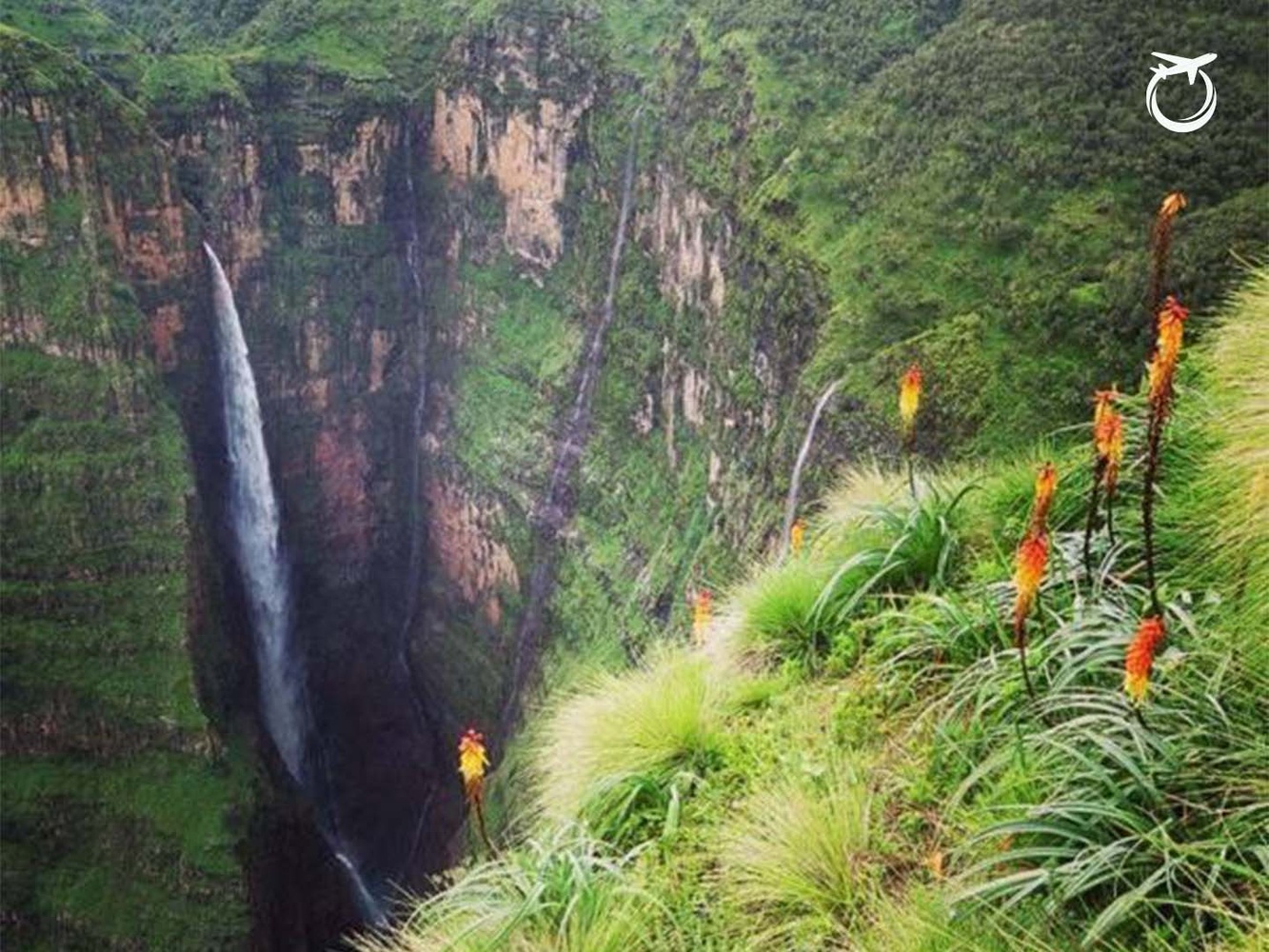
Why the Simien Mountains Are So Special
The Simiens are the result of millions of years of volcanic activity and erosion, leaving behind a landscape of flat-topped plateaus, deep gorges and isolated peaks. The park sits at high altitude, with most trekking taking place between roughly 3,000 and 4,500 metres above sea level. At these elevations the air is thin and cool, the light is extraordinary, and the sense of space is almost overwhelming.
Beyond the scenery, the Simiens are a stronghold for some genuinely rare animals. This combination of accessible high-altitude trekking and endemic wildlife is what makes the region unmissable.
The Wildlife You Came to See
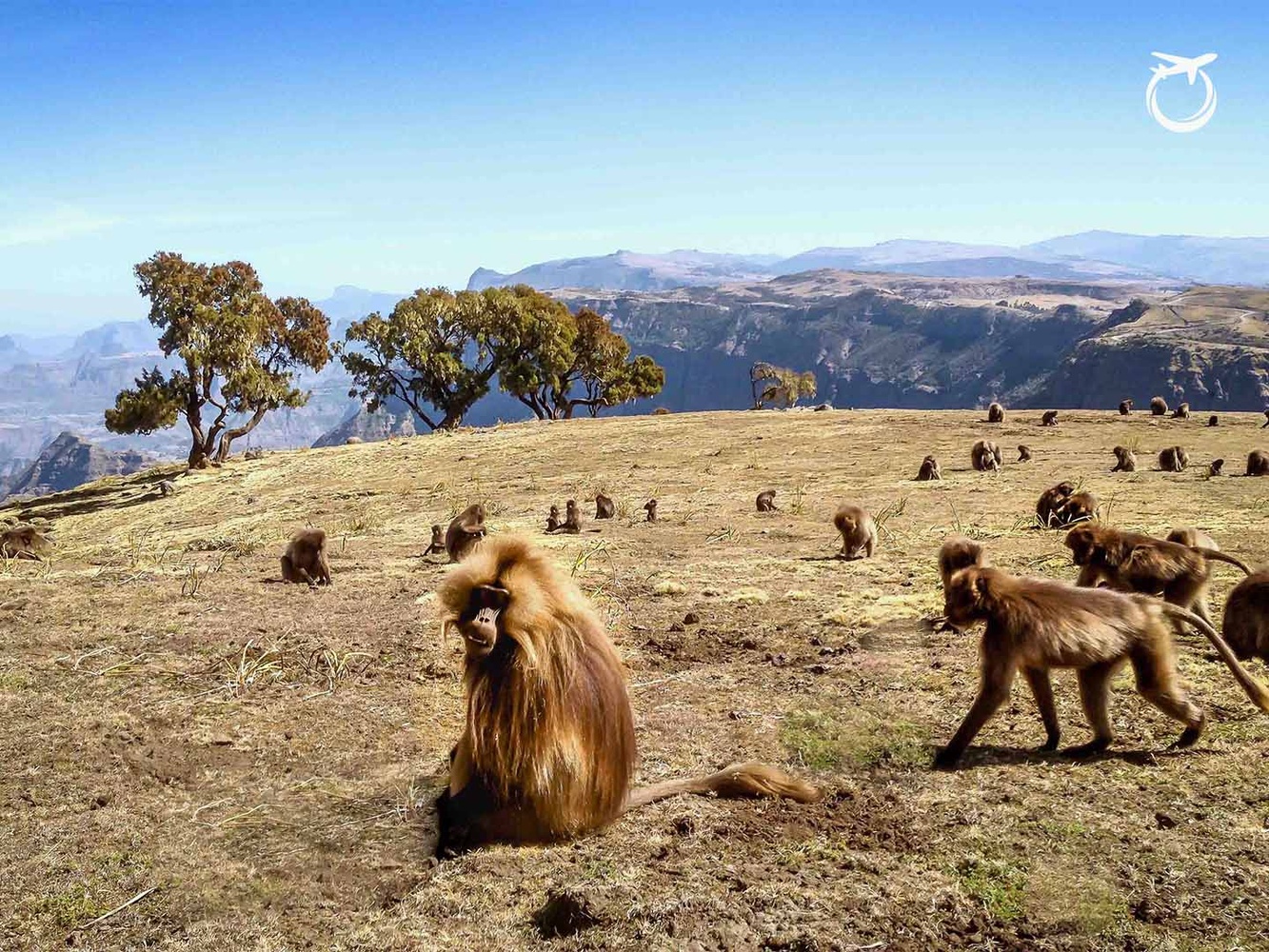
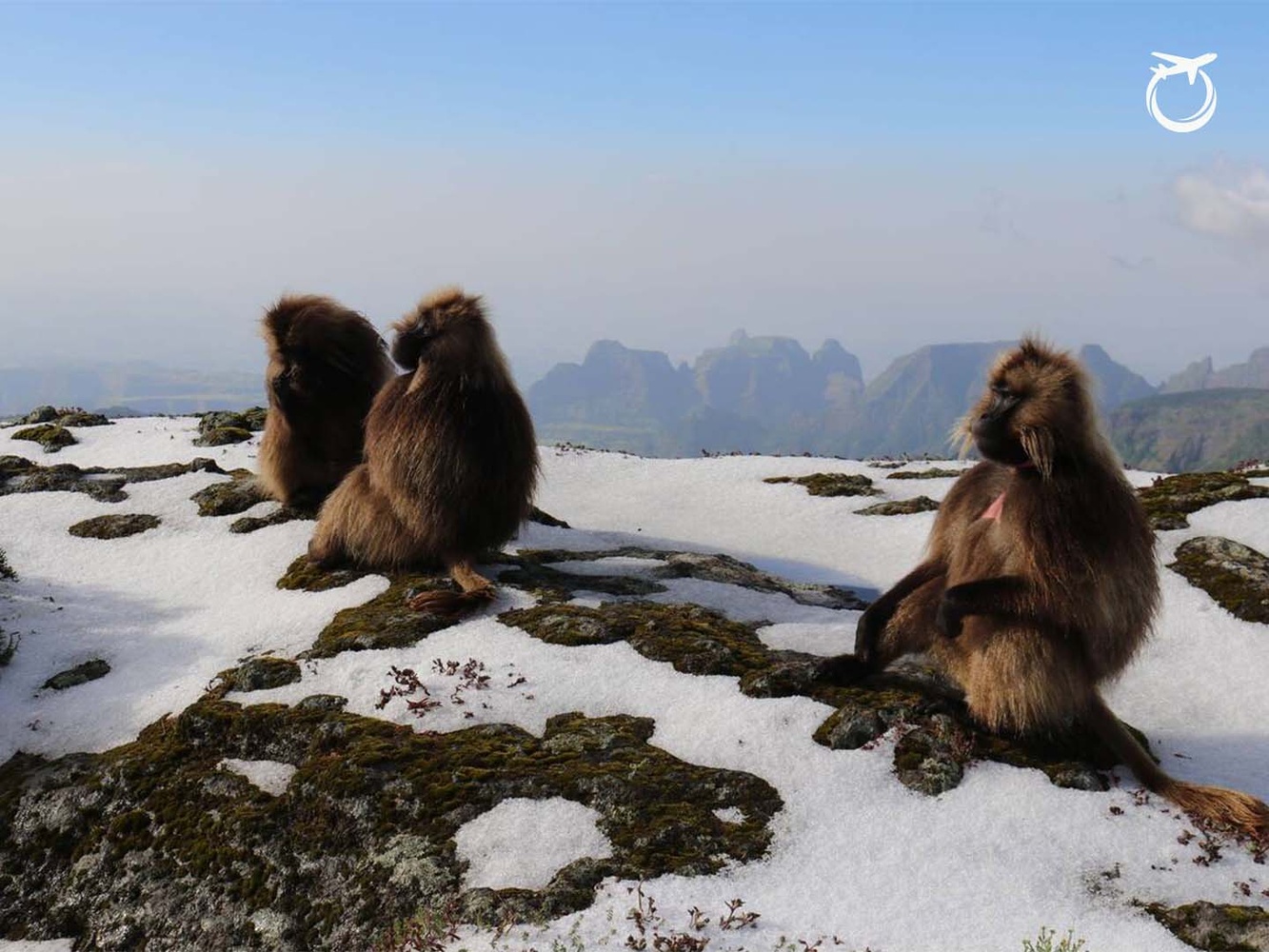
The undisputed stars are the gelada monkeys, sometimes called bleeding-heart monkeys for the distinctive red patch on their chests. Found only in the Ethiopian highlands, geladas live in large troops that can number in the hundreds, and they are remarkably relaxed around people. Watching them graze, groom and bicker just a few metres away is one of the most memorable wildlife encounters in Africa.
You may also spot the walia ibex, a wild goat with magnificent curved horns that clings to the steepest cliffs and exists nowhere else on earth. The elusive Ethiopian wolf, one of the rarest canids in the world, is occasionally seen on the higher plateaus, particularly around Chenek and beyond. Overhead, keep an eye out for the lammergeier (bearded vulture), a huge bird with a wingspan of nearly three metres that soars along the escarpment riding the thermals.
Choosing Your Trek
The beauty of the Simiens is that they suit almost any timeframe and fitness level. Here are the main options we recommend.
Day Trips from Debark
If time is tight, a day trip from the town of Debark is entirely feasible. You can drive up to the escarpment, walk a section of the ridge near Sankaber, and reliably encounter gelada troops and dramatic viewpoints, all without an overnight stay. This is a great option for travellers combining the park with the historic route who do not want to commit to multi-day camping.
The Classic 3 to 4 Day Trek: Sankaber to Geech to Chenek
For most visitors, this is the sweet spot. The classic route links the camps of Sankaber, Geech and Chenek, taking you progressively higher and deeper into the park. Along the way you pass the spectacular Jinbar waterfall and the viewpoint at Imet Gogo (around 3,900 metres), arguably the finest panorama in the entire range. Wildlife sightings build as you go, and by Chenek you are in prime territory for ibex and, with luck, the Ethiopian wolf.
Summiting Ras Dashen
Ras Dashen (also spelled Ras Dejen) is the highest peak in Ethiopia at roughly 4,550 metres, and one of the tallest in Africa. Reaching the summit is a serious multi-day undertaking, typically requiring around a week round trip from Debark, with a long, demanding push to the top on summit day. It is non-technical — no ropes or climbing skill required — but the altitude and distance make it a real challenge. We recommend it only for fit trekkers who have allowed time to acclimatise properly.
Getting There
The gateway to the Simiens is the historic city of Gondar. The easiest approach is to fly from Addis Ababa to Gondar (airport code GDQ), a short and scenic domestic hop that saves you a very long drive. From Gondar it is roughly a two to three hour drive north to Debark, the town at the park's edge where all treks are organised and permits are issued.
You can search flights to Gondar through FlyEthio and book everything in one place. Many travellers also build the Simiens into a wider northern Ethiopia loop taking in Gondar's castles, Lalibela's rock-hewn churches and Lake Tana — and our tour packages can handle the entire itinerary for you.
Rules and Requirements
Trekking in the Simien Mountains is regulated, and for good reason. You cannot enter the park independently. By law, every group must be accompanied by an armed scout (a local ranger), and in practice you will also travel with a licensed guide. These are arranged in Debark at the park office, and the scout fee, guide fee and park entry permit are paid there. Most organised tours bundle all of this into the trip cost.
The scout requirement is not negotiable, and it supports the local community while keeping you safe on remote, exposed terrain. Permit and scout fees can change, so we always advise confirming the current rates with your tour operator or the park office before you travel.
When to Go
The best time to trek the Simiens is during the dry season, from October to March. October sees the highlands at their greenest, freshly washed by the summer rains, with wildflowers still in bloom. The months from November through February offer the most reliable clear skies and the best visibility for those endless escarpment views.
Avoid the main rainy season from June to September, when trails turn to mud, clouds obscure the views, and river crossings can become difficult. Whatever the season, be prepared for genuinely cold nights — temperatures at the higher camps regularly drop below freezing after dark.
Altitude and Packing Advice
Altitude is the single biggest factor people underestimate. With camps above 3,500 metres and summits approaching 4,500, mild altitude symptoms — headaches, breathlessness, poor sleep — are common. We strongly recommend building in time to acclimatise, ascending gradually, drinking plenty of water, and not rushing the higher routes. If you have a day or two in Gondar (around 2,100 metres) first, all the better.
For packing, prioritise warmth and layers. Essentials include:
- A warm sleeping bag rated for sub-zero temperatures if camping
- Insulated jacket, fleece and thermal base layers for cold mornings and nights
- A waterproof shell, even in the dry season
- Broken-in hiking boots and good socks
- Sun hat, sunglasses and high-factor sunscreen — UV is intense at altitude
- A reusable water bottle and water purification
- Headlamp, gloves and a warm hat
Where to Stay
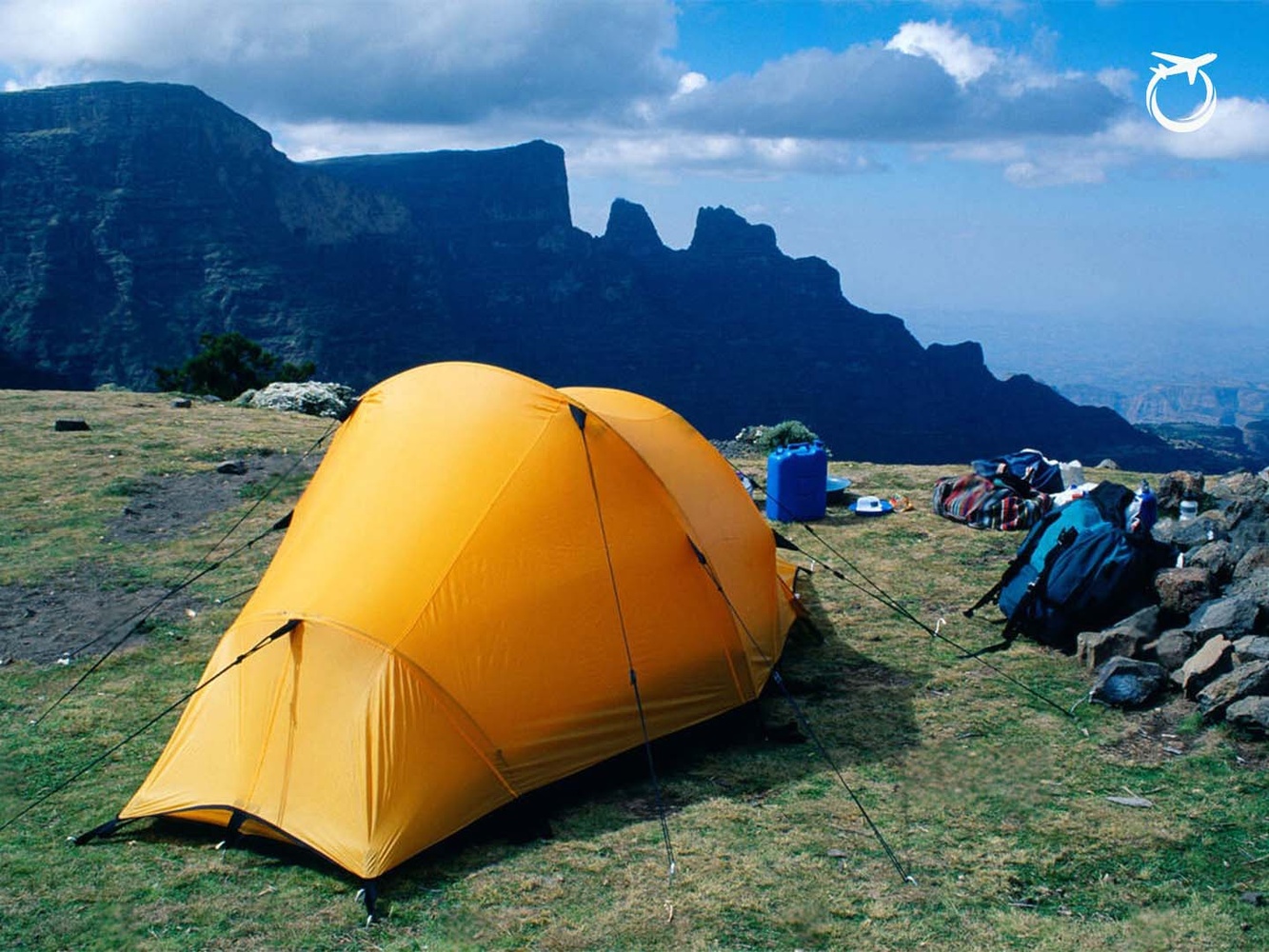
Accommodation in the park itself is primarily camping at the designated sites of Sankaber, Geech and Chenek. On organised treks your crew handles the tents, cooking and gear, so you simply walk and enjoy the experience.
For more comfort, a number of mountain lodges have opened along the escarpment in recent years — lodges in the style of Limalimo offer warm beds, hot showers and superb views, allowing you to do day walks and return to a comfortable base each night. In Gondar and Debark you will also find a range of hotels for the nights either side of your trek; you can compare and book hotels through FlyEthio.
Ready to Trek the Simiens?
The Simien Mountains reward every bit of the effort it takes to reach them. With endemic wildlife at your feet, some of the most dramatic scenery in Africa, and the option to tailor your trek from a single day to a Ras Dashen expedition, there is something here for every traveller. Let FlyEthio handle the flights, hotels and logistics so you can focus on the trail. Contact us to start planning, or browse our tour packages to book your Ethiopian highlands adventure today.
Frequently Asked Questions
Do I need a guide and scout to trek the Simien Mountains?
Yes. Independent trekking is not permitted. Every group must be accompanied by an armed scout, and you will normally also have a licensed guide. Both are arranged in Debark, and most tour packages include these fees in the overall cost.
How fit do I need to be?
It depends on your route. Day trips and short sections are manageable for most reasonably active travellers. The classic Sankaber–Geech–Chenek trek requires solid fitness and comfort with several hours of walking at altitude each day. Summiting Ras Dashen is a demanding multi-day challenge best suited to experienced, well-acclimatised hikers.
When is the best time to visit the Simien Mountains?
The dry season from October to March is ideal, with November to February offering the clearest skies. Avoid the June to September rains, when trails are muddy and views are often hidden by cloud.
Will I definitely see gelada monkeys?
Sightings of gelada monkeys are extremely reliable throughout the trekking areas, and they are remarkably tolerant of people. Walia ibex are also commonly seen on the cliffs near Chenek. The Ethiopian wolf is much rarer and requires luck, usually on the higher plateaus.
How do I get to the Simien Mountains?
Fly from Addis Ababa to Gondar (GDQ), then drive roughly two to three hours north to Debark, where treks are organised. You can book your flights and arrange the whole trip through FlyEthio.
How cold does it get at night?
Very cold. Nights at the higher camps frequently drop below freezing, so a warm sleeping bag and proper insulating layers are essential even during the dry season.